Concrete Staining & Sealing in Denver, CO
Acid staining, water-based staining, and penetrating concrete sealers for Denver patios, basements, driveways, and decorative interior floors. Free on-site estimate.
Call (970) 972-0880Not every concrete floor needs an epoxy coating. Existing concrete with good surface condition, intact natural color, and no structural issues often looks best with a stain that enhances the natural variation of the concrete rather than covering it with a colored coating system. Acid staining and water-based concrete staining create translucent color effects that interact with the concrete surface uniquely — no two stained floors look identical because no two concrete slabs have exactly the same mineral composition and surface character.
Concrete staining is popular in Denver for basement floors and interior spaces where homeowners want a natural-looking, low-maintenance surface that doesn't have the "industrial garage" aesthetic of a full flake epoxy system. It's also used for exterior concrete patios and walkways where UV resistance and weather tolerance are required. For patios on Denver's front range, where summers bring intense UV and winters bring freeze-thaw stress, the right sealer selection is critical to long-term performance.
Staining Options for Denver Concrete Floors
Acid Staining
Acid staining uses dilute hydrochloric acid mixed with metallic salts to react chemically with the lime content in concrete. The reaction produces unique, variegated color patterns — browns, tans, coppers, and greens depending on the mineral content of the specific concrete and the stain product used. Acid staining can't produce exact colors or patterns predictably, which is either a feature or a limitation depending on your design intent. The result is always unique and always tied to the natural character of the concrete beneath.
Acid staining is best suited for interior applications. Exterior concrete that's been contaminated by road salt, de-icing chemicals, or sealers may not accept acid stain evenly. We test the concrete surface reactivity before recommending acid staining for any project.
Water-Based Concrete Staining
Water-based concrete stains are acrylic or reactive solutions that penetrate the concrete surface and produce more consistent, predictable color results than acid staining. Color options are broader, and the outcome is more controllable. Water-based stains are appropriate for both interior and exterior applications and work on concrete surfaces that may not react well to acid staining.
Penetrating Sealers
For concrete that looks good as-is and just needs protection, penetrating sealers provide excellent weather and stain resistance without significantly changing the floor's appearance. Silane-siloxane sealers penetrate the concrete and create a hydrophobic barrier without film build on the surface. These are popular for Denver driveways and exterior patios where a natural look is preferred but protection from road salt and freeze-thaw is required.
Project Details
| Applications | Basement floors, interior decorative floors, patios, driveways, walkways |
|---|---|
| Install Timeline | 1–2 days for most residential projects; varies with size and stain type |
| Surface Prep | Cleaning, light grinding or etching as needed — depends on existing surface condition |
| Topcoat / Sealer | Polyaspartic, polyurethane, or penetrating sealer applied over stain for protection |
| Exterior Suitability | Water-based stains and penetrating sealers appropriate for Denver exterior concrete |
| Pricing | Quoted per job after free on-site inspection — every quote is itemized in writing |
Our Concrete Staining Process
- 1Surface Assessment — We evaluate the concrete condition, test surface reactivity for acid stain eligibility, and assess any prior sealer or contaminant presence that would affect stain absorption. We give you an honest assessment of whether staining will achieve the look you want on your specific slab.
- 2Written Quote — Square footage, surface prep scope, stain type, and sealer or topcoat selection — itemized in writing before any work begins.
- 3Surface Preparation — Cleaning, degreasing, light grinding or mechanical etching where needed. Prior sealer removal if the concrete has been previously sealed and stain penetration would be blocked.
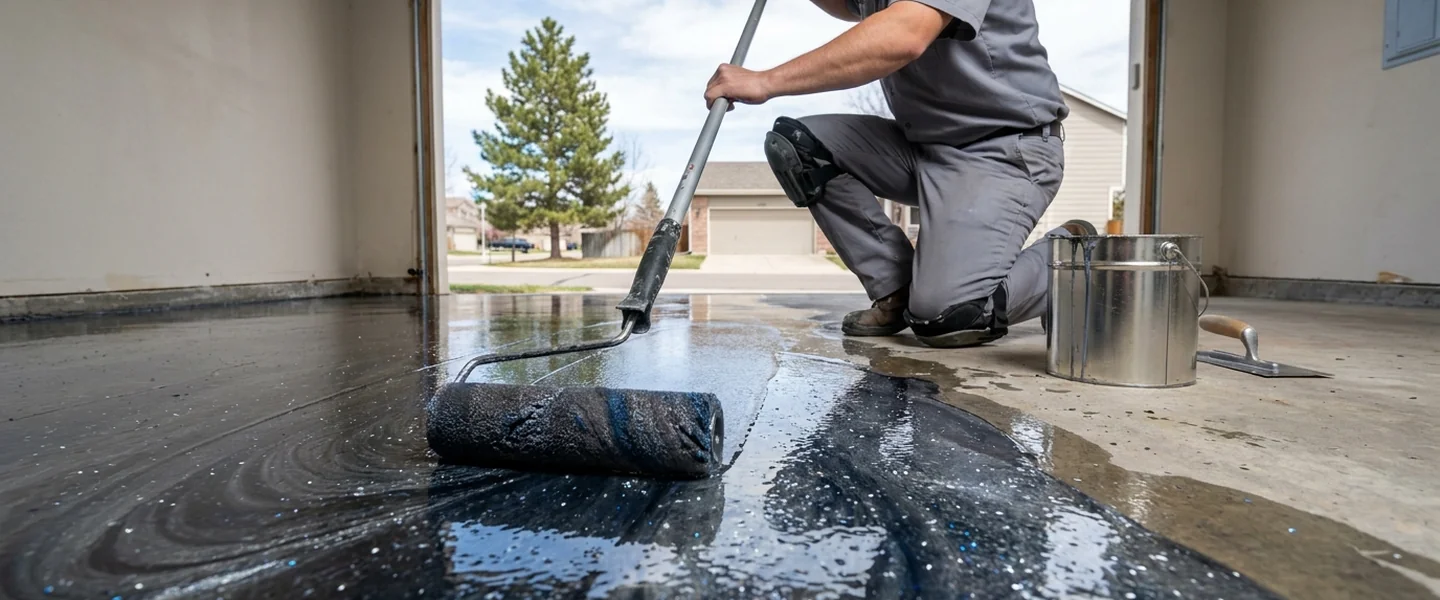
- 4Stain Application — Applied by brush, sprayer, or roller depending on the stain type and desired effect. Multiple coats or layering techniques for more complex color effects.
- 5Sealer or Topcoat — Protective sealer or topcoat applied over the cured stain. Interior floors typically get a polyaspartic or polyurethane topcoat for durability. Exterior concrete gets a penetrating or film-forming sealer appropriate for UV and freeze-thaw exposure.
Denver-Specific Considerations for Exterior Concrete
Denver's patio and driveway concrete faces specific stresses that affect both stain performance and sealer selection. The freeze-thaw cycle — concrete absorbs water, water freezes, expands, and stresses the concrete and any coating above it — is the primary failure mechanism for exterior concrete sealers in Colorado. A film-forming sealer that traps water beneath it can actually accelerate surface spalling in freeze-thaw conditions. We recommend penetrating sealers for most Denver exterior concrete applications — they protect without trapping moisture.
Denver's intense UV also degrades some exterior sealer formulations quickly. UV-stable acrylic and silane-siloxane sealers maintain their effectiveness significantly longer than standard sealers under Colorado's high-altitude UV exposure. We select sealer products with Denver's UV index in mind.
How We Quote Concrete Staining in Denver
Concrete staining pricing depends on square footage, the current condition of the concrete surface, whether prior sealers or coatings need to be removed, and the staining method and topcoat selected. A clean, bare, reactive concrete basement floor is simpler to stain than an exterior patio that's been sealed twice and has significant weathering variation.
We assess the concrete before recommending a staining approach, because recommending a stain that won't achieve the look you want on your specific slab isn't serving you. Call (970) 972-0880 to schedule a free on-site assessment.
After Your Concrete Staining Is Complete
Interior stained floors with a polyaspartic topcoat are ready for light foot traffic within 4–6 hours of topcoat completion. Avoid dragging furniture or rubber-backed mats across the surface for the first 7 days — the topcoat achieves full chemical and mechanical cure at 7 days, and rubber can leave temporary marks on a freshly cured polyaspartic surface during the initial cure period. After 7 days, the floor is fully cured and rugs, mats, and furniture can be placed normally.
For exterior stained concrete with a penetrating sealer, the sealer typically cures within 24–48 hours depending on temperature and humidity. Denver's low humidity and frequent wind accelerate penetrating sealer cure compared to coastal markets — a practical advantage for Colorado exterior applications. Avoid foot traffic on freshly applied penetrating sealer for 24 hours, and avoid vehicle traffic on sealed driveways for 48–72 hours.
Ongoing maintenance for interior stained floors: sweep regularly to remove grit that can abrade the topcoat, mop with a pH-neutral cleaner (not bleach or acid-based products), and address spills promptly. The polyaspartic topcoat is stain-resistant, but prolonged exposure to red wine, coffee, or strong food dyes warrants prompt cleanup. The stain layer beneath the topcoat is permanent — what you're maintaining is the topcoat above it.
For exterior penetrating-sealed concrete, resealing every 3–5 years maintains the hydrophobic barrier and protects the concrete from Denver's freeze-thaw cycling and UV exposure. Signs that resealing is due: water no longer beads on the surface and is absorbed instead. We offer resealing services and will advise on timing at the annual follow-up call.
Concrete Staining FAQ — Denver, CO
Can I acid stain my Denver patio?
It depends on the patio's condition. Exterior concrete exposed to road salt, sealers, or significant weathering may not accept acid stain evenly. We test reactivity on-site before recommending acid staining for exterior applications. Water-based staining is more forgiving for exterior concrete and often the better choice for Denver patios.
Will staining hide cracks in my concrete floor?
No — staining enhances and protects the concrete surface but doesn't fill or hide cracks. Cracks are visible through stain and sealer. If the goal is a crack-free surface, crack repair and/or an epoxy coating system is a better fit. We'll be direct about this at the estimate so you're not disappointed with the result.
How long does concrete staining last in Denver's climate?
Interior stained floors with a polyaspartic topcoat last 10–15 years with normal maintenance before requiring topcoat recoating. Exterior stained concrete with penetrating sealer typically needs resealing every 3–5 years depending on traffic and UV exposure. We'll give you realistic expectations for your specific application at the estimate visit.
Can you stain a floor that's been previously painted?
Prior paint or coating on the concrete needs to be fully removed before staining can work — stain needs to penetrate to the concrete surface. Removal may require grinding or chemical stripping depending on the prior product. We assess this at the estimate and include removal scope in the quote if needed.
Is stained concrete slippery?
Stained concrete with a film-forming topcoat can be slippery when wet. Anti-slip aggregate can be added to the topcoat for interior or exterior applications where slip resistance is a concern — particularly on entry areas, pool surrounds, or stairways. We'll recommend slip additive for any application where wet-surface traction is a consideration.
Concrete Staining & Sealing — Denver Metro
Acid staining, water-based staining, and penetrating sealers. Free on-site estimate.
Call (970) 972-0880Related Services
What You Get in Our Quote vs. the Lowball Bid
We don't compete on the lowest sticker price — we compete on the quote that gets the job actually done. Here is what is included in every quote we write, and the cut-corners that show up in cheaper bids.
Included in our written quote
- Concrete moisture + porosity testing
- Crack and pitting repair before coating
- Full diamond-grind surface prep
- Written quote with flake/coat specs
- Cure-time schedule you can plan around
- 5-year warranty against delamination
Cut corners in the lowball bid
- Coating over uncured or wet slab
- Roller-only prep (no diamond grind)
- Lowball quotes without crack repair
- Subbed-out installation
- No moisture testing before coat
- Warranties full of fine print