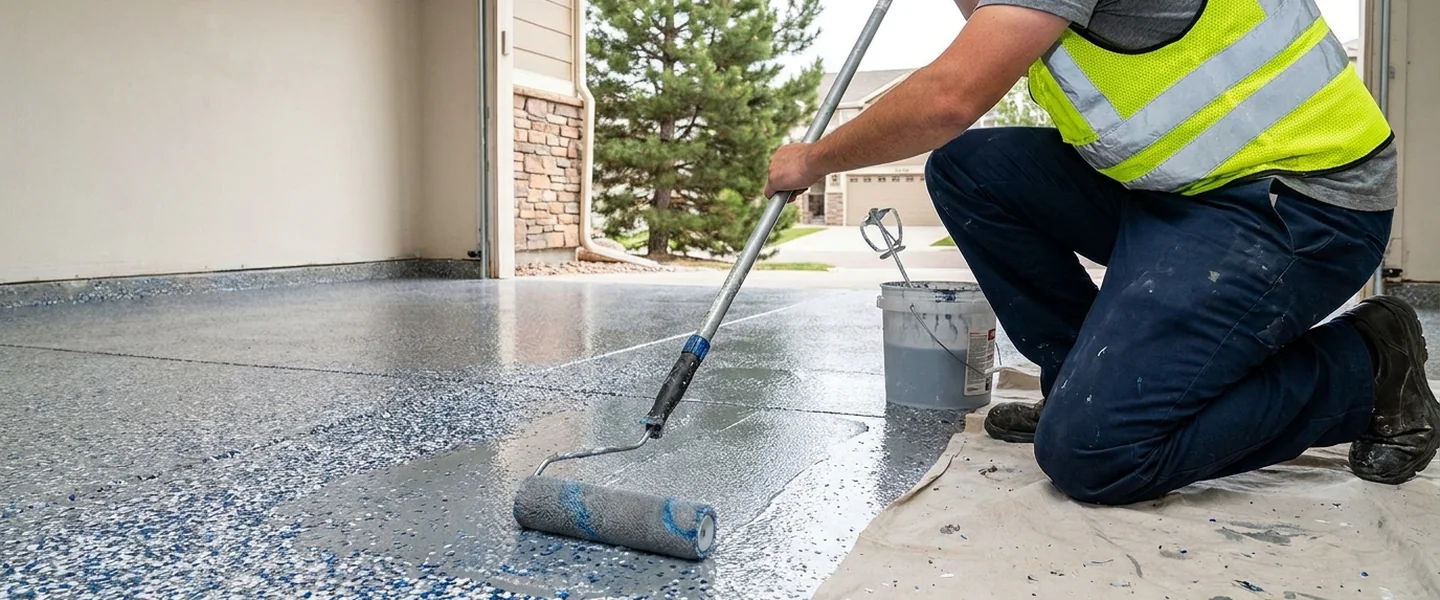
Floor Surface Preparation in Denver, CO
Diamond grinding, crack repair, moisture testing, and concrete profiling — the foundation of every durable floor coating installation in Colorado.
Call (970) 972-0880Surface preparation is the single most important factor in whether a concrete floor coating succeeds or fails. It's also the step that separates professional floor coating companies from low-bid crews. Any experienced floor coating installer will tell you: 70% of a floor coating's long-term performance is determined before a single drop of epoxy or polyaspartic is applied. The coating is only as good as the surface it's bonded to.
Denver Floor Coating performs diamond grinding on every residential and commercial floor installation — no exceptions. We don't substitute acid etching, which cleans the surface but doesn't create a true mechanical profile. We don't use shot blasting only (though it's appropriate for some commercial applications). Diamond grinding to a CSP-3 profile creates the micro-texture that allows coatings to mechanically interlock with the concrete — the only prep method that produces consistent long-term adhesion.
What Floor Surface Preparation Means in Denver
Denver's concrete floors arrive at the coating installation with a range of conditions that all need to be addressed before coating can begin. New concrete slabs in Highlands Ranch and Centennial new builds often have curing compounds applied at the pour that need to be fully removed by grinding before coating will adhere. Older slabs in Denver's established neighborhoods and commercial corridors have years of oil contamination, prior sealer residue, surface carbonation, and concrete laitance — all of which create a weak bond layer between the concrete and any coating applied over it.
Colorado's road salt environment adds a specific preparation challenge. Salt-contaminated concrete surfaces can inhibit coating adhesion even after grinding if salt crystals remain in the concrete pores. We identify and treat salt-contaminated areas as part of our preparation process — particularly relevant for garages in Denver's established neighborhoods where vehicles have tracked road salt in for decades.
Concrete age and mix design also vary significantly across the Denver metro. Older concrete in Commerce City industrial facilities has different grinding characteristics than new-construction concrete in Aurora. We calibrate our equipment and grinding pass depth for the specific concrete we're working with.
Our Surface Preparation Methods
Diamond Grinding
Diamond grinding uses industrial-grade diamond tooling rotating at high speed to remove the surface layer of concrete and create a mechanical profile. The result is a surface with micro-texture that coatings bond to mechanically — not just chemically. We grind to a CSP-3 profile (the industry standard for epoxy and polyaspartic coatings) on every residential garage and most commercial applications. Grinding depth, tooling selection, and machine speed are calibrated for the specific concrete being prepared.
Crack and Joint Repair
Cracks in concrete floors need to be addressed before coating — not after. A coating applied over an open crack will eventually reflect the crack movement through to the coating surface, creating a visible line that then becomes an adhesion failure point. We fill cracks and control joints with semi-rigid polyurea filler that maintains flexibility through Denver's thermal cycling while providing a stable, bondable surface for the coating above. The polyurea filler is compatible with our primer and base coat systems.
Moisture Vapor Emission Testing
Moisture vapor emission (MVE) is one of the most common causes of epoxy coating delamination — and one of the most frequently skipped tests by low-bid installers. Concrete slabs, particularly those on grade (in contact with soil), transmit moisture vapor from the ground through the concrete and to the surface. If MVE exceeds the coating system's tolerance, the moisture pressure causes the coating to blister and delaminate from below — sometimes within weeks of installation.
In Denver, concrete moisture conditions vary by location and season. Garages adjacent to irrigation systems, homes in low-lying areas near Cherry Creek or the South Platte, and older homes with compromised vapor barriers under the slab can all have elevated MVE rates. We test before installation — not after a failure.
Spall and Surface Defect Repair
Spalls — areas where the concrete surface has broken away, leaving a rough crater — need to be filled and leveled before coating. We use epoxy mortar or polyurea-based repair compounds for spall repair, matched to the specific coating system being applied over it. Proper spall repair is invisible under the finished coating. An unrepaired spall telegraphs through any coating system.
Project Details
| Grinding Standard | Diamond grinding to ICRI CSP-3 profile on all installations |
|---|---|
| Moisture Testing | Calcium chloride or RH probe test on every slab before coating — results guide primer selection |
| Crack Repair | Semi-rigid polyurea filler — flexible through thermal cycling, bonds to concrete and coating systems |
| Equipment | Walk-behind planetary grinders for open floor areas; hand grinders for edges and tight areas |
| Prep Timeline | One full day for most residential garages; larger commercial spaces proportionally longer |
| Included In | Surface preparation is included in every floor coating installation quote — not a separate add-on |
Why Preparation Determines Everything
The Denver market has seen a proliferation of DIY epoxy kits and low-cost franchise crews that skip proper preparation. The failure pattern is consistent: coating looks good for 6–18 months, then starts peeling in sections — often beginning at high-traffic areas near the garage door where freeze-thaw cycling and road salt concentration are highest. Homeowners who've been through one failed epoxy installation understand preparation better than anyone.
Proper preparation takes a full day for a standard two-car garage — sometimes longer if there are significant cracks, spalls, or contamination to address. That prep day is what separates a 2-year coating from a 15-year coating. We include the prep day as a standard part of every floor coating installation — it's not an optional add-on and it's not abbreviated to keep the quote low.
How We Quote Surface Preparation
Surface preparation is included in our floor coating installation quotes — we don't unbundle it to make the initial price look lower and then add it back as a line item on installation day. The on-site assessment allows us to determine the prep scope for your specific concrete before we quote. A floor with significant cracks, oil contamination, and prior coating remnants requires more preparation than clean new concrete — and the quote reflects that reality upfront.
If you're evaluating multiple floor coating quotes, ask each company specifically about their preparation method. "We diamond grind" is the right answer. "We acid etch" or "we'll prep as needed" are not. Call (970) 972-0880 for a free on-site assessment.
Surface Preparation FAQ — Denver, CO
What is diamond grinding and why does it matter?
Diamond grinding uses industrial rotating diamond tooling to remove the surface layer of concrete and create a mechanical profile — microscopic peaks and valleys that coating systems bond to mechanically. Without this profile, coatings bond only chemically, which is insufficient for the stresses a garage floor experiences. Diamond grinding to CSP-3 profile is the industry standard for durable epoxy and polyaspartic coating installations.
Isn't acid etching good enough?
Acid etching opens the concrete pores and improves chemical bonding, but doesn't create a true mechanical profile. It's also less effective on concrete that has been sealed, coated, or contaminated. The floor coating industry standards (ICRI and SSPC) specify diamond grinding for coatings 6 mils and thicker. Our systems are 80–250 mils — well above the threshold where acid etching is an appropriate substitute. We don't offer acid-etch-only preparation because it produces inferior long-term results.
My garage has a lot of cracks — can you still coat it?
Yes. Most residential concrete cracks are surface or shrinkage cracks that can be filled and coated over. We evaluate the cracks during the on-site assessment — their width, depth, whether they're active (still moving) or dormant, and whether any reflect structural issues that need a structural repair rather than just crack filler. We'll give you an honest assessment of whether your crack situation is within normal range or needs additional attention before coating.
What happens if moisture is too high?
If the moisture vapor emission rate exceeds our primer's tolerance, we have two options: use a high-MVE-tolerance primer formulated to handle elevated moisture, or recommend that the underlying moisture source be addressed before coating. We won't install a coating over moisture conditions that will cause it to fail — that's a warranty claim and a reputation issue we're not willing to accept. If your slab has elevated MVE, we'll tell you what it means and what the options are before you decide to proceed.
Do you handle old coating removal?
Yes — failed epoxy coatings, old paint, or other surface coatings that need to be removed before new installation are within our scope. Old coating removal typically adds to the prep time and is reflected in the quote. The removal method depends on the prior product — in some cases diamond grinding removes it efficiently; in others, additional mechanical removal is needed first.
Floor Surface Preparation — Denver Metro
Diamond grinding standard on every installation. Free on-site concrete assessment.
Call (970) 972-0880Related Services
What You Get in Our Quote vs. the Lowball Bid
We don't compete on the lowest sticker price — we compete on the quote that gets the job actually done. Here is what is included in every quote we write, and the cut-corners that show up in cheaper bids.
Included in our written quote
- Concrete moisture + porosity testing
- Crack and pitting repair before coating
- Full diamond-grind surface prep
- Written quote with flake/coat specs
- Cure-time schedule you can plan around
- 5-year warranty against delamination
Cut corners in the lowball bid
- Coating over uncured or wet slab
- Roller-only prep (no diamond grind)
- Lowball quotes without crack repair
- Subbed-out installation
- No moisture testing before coat
- Warranties full of fine print